Monday, October 14, 2013

Steve Jobs: The Next Insanely Great Thing - wired article before his second coming to Apple

Wired article with on Steve Jobs - before his second coming to Apple


Steve Jobs has been right twice. The first time we got Apple. The second time we got NeXT. The Macintosh ruled. NeXT tanked. Still, Jobs was right both times.

Read More 

Friday, August 23, 2013

Enterprise Sales Tips for Hackers

Useful to know when you are starting out and trying to sell to enterprise


When my co-founder and I were starting out, we came from an engineering background and thought of sales as black magic. Divine the customer's deepest desires, howl a few bewitching incantations, and then—abracadabra—a contract would be conjured. Magic!

Two years of selling served as a painful exorcism. There's no magic to enterprise sales, but there's a hell of a lot of zoology. LTV, field sales, inside sales, CAC, prospects, leads, consumerization, channel sales, … the array of terms is bewildering and there's no textbook that explains how it all fits together.


Read More 

Steve Jobs The Lost Interview (Full Film) 2012

This is a great interview with Steve Jobs in 1995 just before he re-joined Apple.


Clearly he knows what he is talking about and the thought process is super lucid. In his first stint at Apple he was very good. After NeXT he became great.
See More 

Business Analysis Using User Stories

This is a great summary with succinct elaboration of what User Stories are in Agile software development.


User Stories are a great addition to our repertoire of ways of expressing stakeholder requirements.

See More 

Saturday, July 20, 2013

Google Analytics - Multi-armed Bandit Experiments

Multi-armed Bandit Experiments - no wonder my A-B stats look like they do...


This article describes the statistical engine behind Google Analytics Content Experiments. Google Analytics uses a multi-armed bandit approach to managing online experiments. A multi-armed bandit is a type of experiment where:
  • The goal is to find the best or most profitable action
  • The randomization distribution can be updated as the experiment progresses

The name "multi-armed bandit" describes a hypothetical experiment where you face several slot machines ("one-armed bandits") with potentially different expected payouts. You want to find the slot machine with the best payout rate, but you also want to maximize your winnings. The fundamental tension is between "exploiting" arms that have performed well in the past and "exploring" new or seemingly inferior arms in case they might perform even better. There are highly developed mathematical models for managing the bandit problem, which we use in Google Analytics content experiments.


Read More 

Adding an additional layer of authentication to websites with HTTP Reverse Proxies

Adding an additional layer of authentication to websites with HTTP Reverse Proxies


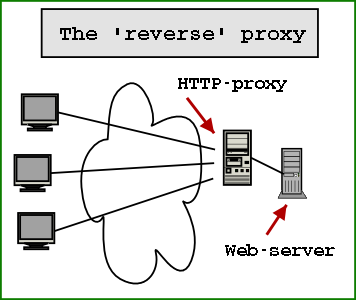
For my last client engagement, I was tasked with adding an additional layer of authentication to a publicly accessible website without actually modifying the website’s application code or web server configuration. After doing a little research, I came upon the idea of using a HTTP reverse proxy to intercept requests to the website and perform additional authentication before letting end users access the target web application.


If you are not familiar with the concept of a HTTP reverse proxy, think of it as a specialized web server that inspects incoming HTTP requests, forwards them to another (usually internal) web server after any local processing is completed, and makes sure that HTTP responses sent back to the client contain proper host names. The following diagram illustrates the typical processing flow when using a SSL enabled reverse proxy server that is acting as a front end to an internal web server.


Read More 

Finding the Next Great Opportunity

Head of Amazon Web Services on Finding the Next Great Opportunity


With the frequency that you hear “cloud computing” mentioned at conferences and in the tech press, you might believe it’s just a tired buzzword that salesmen use to induce boring people to get excited about buying enterprise services.


James Hamilton wants to convince you otherwise. He approaches technical innovation from a skeptical perspective, with a flair for hands-on empiricism. As a Vice President and Distinguished Engineer on the Amazon Web Services (AWS) team, he’s been hard at work building the basic technology of cloud computing before the first impeccably coiffed consultant first uttered the phrase.


Read More