Monday, November 21, 2011

6 Things Jeff Bezos Knew Back in 1997


  1. When you have a window of opportunity, go for the jugular – even if you have to exhaust a huge number of resources.
  2. Think long-term meaning 5 – 7 years, not 5 – 7 months
  3. Long-term market share is more important than short-term profits because without long-term market share there will be no long-term profits.
  4. It’s ok to make mistakes but it’s not ok to be timid.
  5. Obsess over Customers
  6. Be first in a big market

Monday, October 17, 2011

Facebook as leading indicator for Enterprise Apps?!


Haven't posted for awhile. But this is something worth noting in the recent Web 2.0 Summit in San Francisco. Salesforce CEO Marc Benioff seems to have big crush on Facebook and how that is the future for even Enterprise Apps!

Salesforce CEO: Facebook Is Leading The Direction For Where ‘We’re Going As An Industry’

“I really think that Facebook is becoming a vision of what the consumer operating system is”, he said. “Everything I want, I’m beginning to see on Facebook”.

Friday, July 8, 2011

Memory and Magnets in our future

Some glimpses of future tech that will again change our computing usage patterns:


IBM develops 'instantaneous' memory, 100x faster than flash

"a new kind of phase change memory (PCM) that reads and writes 100 times faster than flash, stays reliable for millions of write-cycles (as opposed to just thousands with flash), and is cheap enough to be used in anything from enterprise-level servers all the way down to mobile phones."


Future Magnetic Computers Could Consume Only Tiny Amounts Of Energy

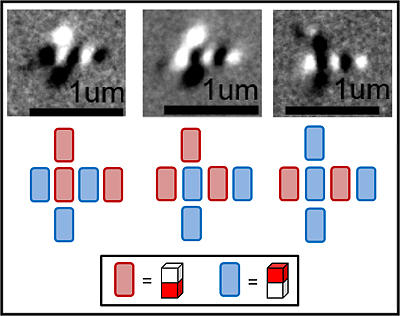
"Researchers at the University of California, Berkeley have discovered that microprocessors using tiny magnets (pictured below) for logic, memory, and switching operations would dissipate just 18 millielectron volts of energy per operation at room temperature. That's a very small amount of electricity. In fact, it's the smallest amount of electricity possible to transmit information--a number known as the Landauer limit."

Sunday, July 3, 2011

Pull, Apple and 10 Reasons You Aren't Rich


The Power Of Pull

"What makes email, Facebook, and Google so valuable? Answer: Visiting them is largely unprompted, "

"Why is Pull so essential for a web company? The intersecting forces of human psychology and economics."


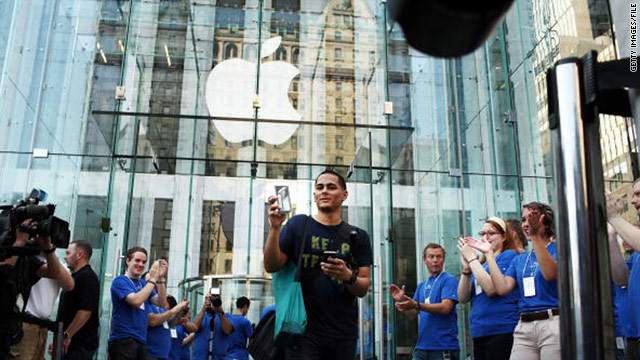
Apple's 'crazy' retail gamble

"It started with one store at Tysons Corner Center in Virginia, just outside of Washington. Ten years and more than 300 stores later, it's become a retailing venture
unique in the world of consumer electronics.
"


10 Reasons You Aren't Rich

"The reason why you aren't a millionaire (or on your way to becoming one) is really quite simple. You probably assume it's because you aren't earning enough money, but the truth is that for most people, whether or not you become a millionaire has very little to do with the amount of money you make. It's the way that you treat money in your daily life.

Here are 10 possible reasons you aren't a millionaire:

10. You Care What Your Neighbors Think
....
"

Monday, May 16, 2011

Interesting recent developments from all around.


Microsoft uses Facebook 'likes' to battle Google

To make results more relevant, Microsoft is launching a new feature in Bing search that bakes in recommendations from Facebook friends.

The new feature, making its debut tomorrow, will elevate results that have received a thumbs-up "like" from a friend on Facebook. So if a user is searching for a Thai restaurant in San Francisco, for example, a particular spot that received kudos from that person's Facebook posse will climb in the results.

Read more


Tricorder coming to life?

A real-life diagnostic device that does something akin to what the tricorder did on "Star Trek" just might earn its developers $10 million prize. And yes, the proposed competition is actually being called the Tricorder X Prize. It's just one more example of life imitating "Trek." In the words of Mr. Spock: Fascinating!


Video games are art!


The National Endowment for the Arts recently made an announcement that was MIDI music to our ears: It was now considering "interactive games" among the art forms to which it would offer funding.


This was obvious from the get-go: The iPad Is A $500 Kid's Game


A survey from PBS has revealed something pretty staggering for a $500-plus next-gen computing device: 70% of parents are happy to hand the iPad to their kids, and download child-friendly apps for the rugrats.

Thursday, April 28, 2011

Smart Phones and Tablets

Here are a couple of things I have been reading:


In light of the recent fracas about iPhone and Andriods keeping tabs on users' location and other data, The Really Smart Phone is a really good article on what some researchers are doing (and can do) with your smartphone data. Provides good insight on the possibilities which some might find disconcerting, but I actually see as quite exciting (e.g. for data mining, statistics and human/social interactions).

A related article but this time about your TV tracking you! TV's Next Wave: Tuning In to You


I've also been looking to get a tablet, so this is part of my research: Barnes & Noble Beats Amazon To The Android App Punch, But Kindle Will Likely Prevail . Actually regardless of the prognostication in the title, I think the Nook is closest to what I need for a tablet - which is primarily for reading e-books and very light web browsing.

Wednesday, April 27, 2011

Basketball and Project Management?

A big part of Project Management is the management of resources. And the most critical resource is of course human resource. To achieve anything worthwhile it is critical to be able to build an A-Team. Recruiting, however, just the start. Building them into a real team - now that is the key.

This is also true for team based sports. I recently encountered a couple of articles that can serve to provide insights into this area of team management - which can be something of a black art to many people.


First are some excerpts from - I Can’t Accept Not Trying. Michael Jordan on the Pursuit of Excellence. Here's the main takeaway:

"I’d rather have five guys with less talent who are willing to come together as a team than five guys who consider themselves stars and aren’t willing to sacrifice.

Talent wins games, but teamwork and intelligence wins championships.
"


Secondly, there's this more recent article in Fast Company magazine, What LeBron James And The Miami Heat Teach Us About Teamwork, exploring this same concept but in a slightly different context - the experiment by the Miami Heat to create a superstar team with the express goal of winning the NBA Championship. This article investigates the (ongoing) trials, experiences and adventures in gelling together the "Heatles" team of Lebron James, Chris Bosh and Dwayne Wade each of whom were the star player in their teams prior to participating in this adventure/experiment. I found this treatment of the subject very informative and enlightening from the perspective of team and project management - especially the creation of a team to achieve very specific and short term goals.

Imagine building an A-Team for a startup project.